Top 10 Rox Alternatives for AI Customer Success in 2026
Rox automates sales workflows for revenue teams. But sales is one department. Here are 10 alternatives — from CS platforms to autonomous agent systems — ranked by what they actually deliver across the full customer lifecycle.
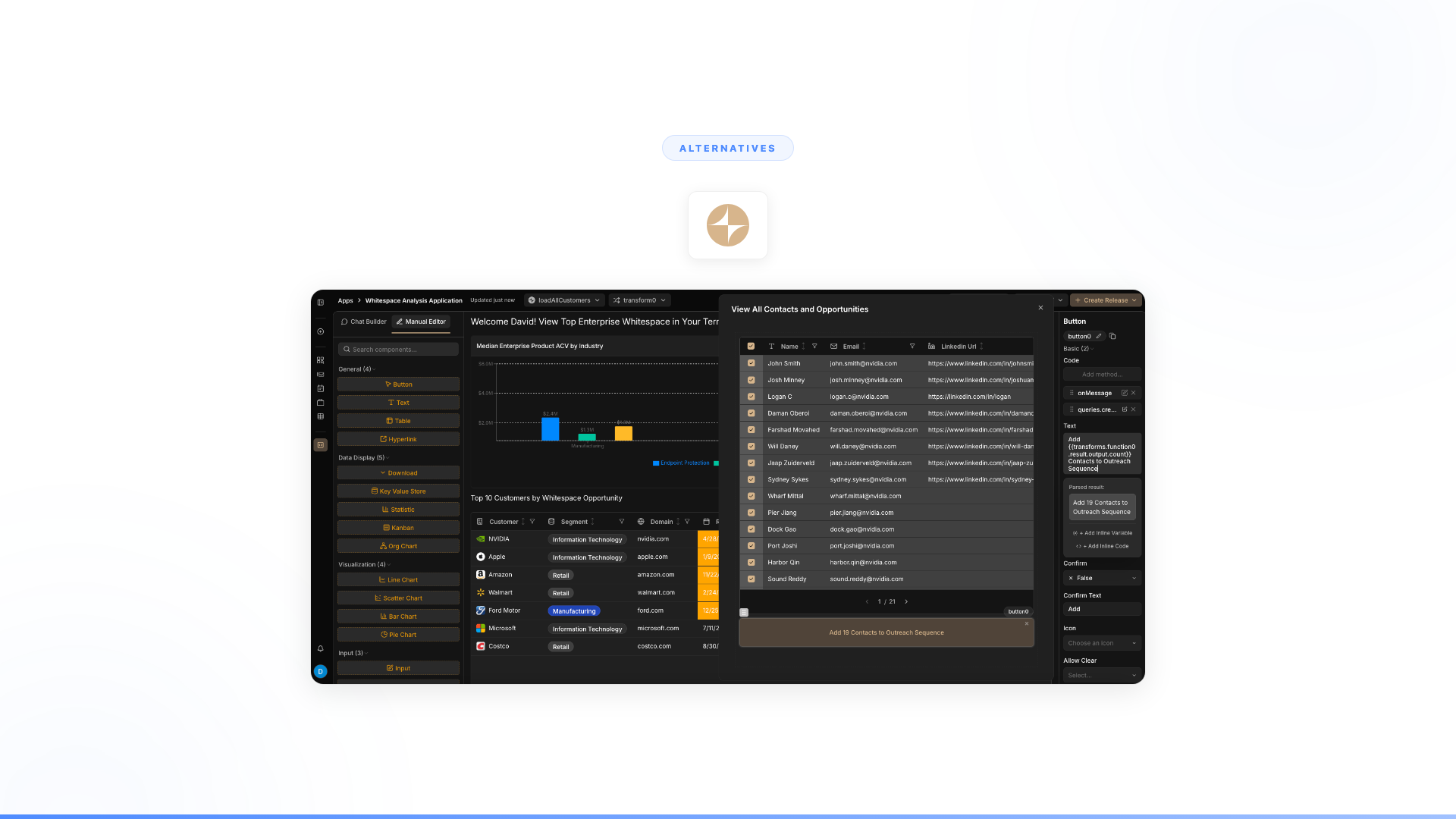
Rox is a well-funded AI sales platform — backed by Sequoia Capital, General Catalyst, and GV, valued at $1.2 billion as of early 2026, with customers including Ramp, MongoDB, and New Relic. It deploys AI agent swarms for sales execution: research, outreach, pipeline management, deal monitoring, CRM automation. Within that scope it is genuinely strong. The problem is scope: customer success doesn't live inside the sales team, and Rox can't follow it there.
If the question is whether sales AI is the only workflow you'll ever need, the answer is probably no. Here are 10 alternatives worth evaluating — from CS-specific platforms that handle the post-sale lifecycle differently, to full autonomous agent platforms that handle customer success and every other department on one foundation.
What is Rox?
Rox is an AI-native sales platform founded in 2024 by Ishan Mukherjee (former Chief Growth Officer at New Relic, co-founder of Pixie, acquired by New Relic in 2020) and backed by researchers including Chris Ré (Stanford Computer Science professor and co-creator of Snorkel AI). The platform connects to tools companies already use — Salesforce, Zendesk, and others — and deploys hundreds of AI agents that monitor account activity, research prospects, and update CRM records autonomously.
Sequoia described the thesis as "every seller needs an agent swarm." General Catalyst and GV backed the same bet. According to TechCrunch, Rox closed 2025 with approximately $8 million in ARR at the time of its most recent raise. Its customers are concentrated in high-growth B2B technology companies.
What Rox does well: Revenue operations. Research, outbound, meeting prep, pipeline monitoring, deal intelligence, CRM hygiene. The AI layer is modern and the product is built around autonomous agent execution rather than workflow automation.
Where it stops: Customer success. Post-sale onboarding, health monitoring, support triage, renewal management, compliance, expansion — these workflows don't fit the Rox product. It's a sales operating system. Not a customer lifecycle platform.
How is Rox different from Gainsight?
This is the comparison that comes up most often. The short version:
- Gainsight is the market leader in customer success platforms. It tracks health scores, triggers playbooks, automates QBR workflows, and organizes CSM work. It was built for the post-sale lifecycle and has the deepest CS feature set of any platform.
- Rox is AI-native but sales-focused. It handles pre-sale execution with modern AI architecture — autonomous agents rather than rule-based automation. It has less depth in post-sale CS workflows and more depth in sales intelligence.
Neither platform completes cross-departmental workflows autonomously. Both organize work for humans to execute. The difference is which side of the deal close they cover.
Quick comparison
| Tool | Category | Best for | Goes beyond CS? | Pricing model |
|---|---|---|---|---|
| Nexus | Autonomous agent platform | Full customer lifecycle + every department | Yes, any workflow | Per-agent |
| Gainsight | Customer success platform | Health scoring and renewal management | No | Per-user enterprise |
| Totango | Customer success platform | Automated CS playbooks | No | Tiered (free to enterprise) |
| ChurnZero | Customer success platform | Churn prediction and engagement | No | Custom enterprise |
| Planhat | Customer platform | Unified customer data and workflows | No | Per-user tiered |
| Vitally | Customer success platform | Product-led CS with usage analytics | No | Per-user tiered |
| Catalyst | Customer success platform | Revenue-focused CS operations | No | Custom enterprise |
| CustomerX | CS automation | Digital-first customer success | No | Custom pricing |
| Custify | Customer success platform | SMB and mid-market churn reduction | No | Per-user tiered |
| Custom build | Developer framework | Engineering teams building from scratch | Depends on team | Engineering cost |
The alternatives, ranked
1. Nexus
What it is: An autonomous agent platform paired with Forward Deployed Engineers who embed with your team. Nexus agents don't just track customer health scores — they complete entire customer lifecycle workflows end-to-end: onboarding new customers, triaging support issues, monitoring account health, managing renewals, identifying expansion opportunities, handling compliance, and executing actions across every system in your stack. Any department. Any workflow. Business teams build and own the agents.
Why teams switch from Rox to Nexus:
The category difference matters. Rox deploys AI agent swarms for sales teams. It automates revenue execution: research, outbound, pipeline, deal monitoring. Nexus agents handle the full customer lifecycle that starts where sales ends — onboarding, activation, support, retention, expansion, and every operational workflow in between. One is a sales operating system. The other transforms how your entire organization manages customers and every other process.
What it looks like in production:
- Orange Group (multi-billion euro telecom, 120,000+ employees): Business team built autonomous customer onboarding agents. Deployed across multiple European markets in 4 weeks. 50% conversion improvement. Approximately $6M+ yearly revenue. 90% autonomous resolution. 100% team adoption. They previously used a CX chatbot with a 27% drop-out rate. The agents handle the full lifecycle: guiding customers through setup, troubleshooting, answering questions, and escalating complex cases with full context. (Nexus client data)
- European telecom (13,000+ employees): Deployed a dozen Nexus agents across support, compliance, and customer operations. 40% support volume freed across millions of interactions. 12-week deployment. (Nexus client data)
Pricing: Per-agent, tied to value delivered. Not per-user or per-action. An agent serving your entire customer base costs the same whether you have 1,000 accounts or 100,000.
Best for: Enterprises that need AI across the full customer lifecycle, not just a health score dashboard. Onboarding, support, compliance, renewal, expansion. Also every other department: sales intelligence, HR, operations, marketing.
Full Nexus vs Rox comparison →
2. Gainsight
What it is: The category-defining customer success platform. Health scoring, renewal management, customer journey orchestration, product analytics (via PX), and community management. Gainsight essentially created the CS platform category and remains the market leader in traditional customer success software.
How it compares to Rox: Different scope within revenue operations. Rox focuses on the sales execution side (research, outbound, pipeline, deal monitoring). Gainsight focuses on what happens after the deal closes: onboarding tracking, health scoring, renewal workflows, expansion identification. If your priority is post-sale customer management rather than pre-sale revenue operations, Gainsight is the established choice.
Why it might not solve the problem: Gainsight is a dashboard and workflow tool, not an autonomous agent. It tracks health scores and triggers playbooks, but CSMs still do the work. The platform tells your team which customers need attention. It doesn't complete the outreach, the investigation, the remediation, or the cross-system action. And its scope stays within customer success. If you also need AI for support triage, compliance monitoring, or any non-CS workflow, Gainsight doesn't reach there.
Pricing: Per-user, enterprise licensing. Typically $100–200+/user/month depending on modules. Annual contracts.
Best for: Mid-market and enterprise CS teams that want structured health scoring, playbook automation, and renewal management, with CSMs still running the process.
See also: Rox vs Gainsight comparison →
3. Totango
What it is: Customer success platform with automated playbooks (called SuccessPlays), health scoring, customer segmentation, and journey management. Known for a modular approach that lets teams start with one use case and expand. Merged with Catalyst in 2024.
How it compares to Rox: Like Gainsight, Totango covers the post-sale customer lifecycle. Its automated playbooks handle structured CS workflows: onboarding sequences, renewal campaigns, risk remediation. Where Rox focuses on sales execution, Totango focuses on CS execution. The modular design means you can start with one segment (enterprise, mid-market, digital) and expand.
Why it might not solve the problem: Same structural limitation as Gainsight. Playbooks automate task assignment and communication sequences, but a human CSM still performs the work. Totango doesn't complete cross-system workflows, handle support triage, or work outside the CS function. If the bottleneck is the operational work behind customer success — not just knowing which customers need attention — Totango identifies the problem without solving it.
Pricing: Starter tier is free (limited features). Growth and Enterprise tiers are custom pricing.
Best for: CS teams that want structured playbook automation with a modular deployment model.
4. ChurnZero
What it is: Customer success platform focused specifically on churn reduction. In-app communication, customer health scoring, automation playbooks, and detailed product usage analytics. Particularly strong at tracking product adoption and engagement patterns that predict churn.
How it compares to Rox: ChurnZero is purpose-built for retention. Where Rox handles the sales function and Gainsight/Totango cover broad CS, ChurnZero goes deep on the churn prediction and prevention problem. Its in-app engagement features (walkthroughs, surveys, announcements) let you intervene inside the product, not just through email or CSM outreach.
Why it might not solve the problem: Deep on churn prediction, limited on everything else. If the real challenge isn't knowing who will churn (most tools can flag that) but completing the remediation workflow across systems, ChurnZero still leaves the execution to humans. And it doesn't extend beyond CS. Support, compliance, HR, sales intelligence: all out of scope.
Pricing: Custom enterprise pricing. Annual contracts.
Best for: SaaS companies where product adoption tracking and in-app engagement are central to the retention strategy.
5. Planhat
What it is: Customer platform combining CS management, revenue analytics, and collaboration features. Positions itself as a "customer platform" rather than just CS software, with data models that unify customer information from multiple sources. Clean, modern interface with strong data visualization.
How it compares to Rox: Planhat shares some DNA with Rox's vision of unifying customer data, but applies it to the post-sale lifecycle rather than sales execution. The data integration layer is solid. You can pull in product usage, support tickets, billing data, and CRM records into one view. More focused on giving teams unified visibility than on autonomous action.
Why it might not solve the problem: Good at consolidating data and visualizing customer health. Less effective at acting on it autonomously. The workflows help CSMs know what to do, but the CSMs still do it. And like every CS platform on this list, the scope stops at customer success. Cross-departmental workflows aren't in scope.
Pricing: Starts around $1,000/month for small teams. Enterprise pricing is custom.
Best for: Teams that want clean data unification and customer visibility across product, support, and revenue data.
6. Vitally
What it is: Customer success platform built for product-led growth companies. Strong product analytics integration, health scoring based on usage patterns, automation workflows, and project management features. Known for a modern UX that product-focused CS teams appreciate.
How it compares to Rox: Where Rox targets large sales-led organizations, Vitally targets product-led businesses. Its strength is connecting product usage data to CS workflows. If a customer stops using a key feature, Vitally flags it and triggers a playbook. For PLG companies, this product-behavior-driven CS approach is more relevant than Rox's sales execution focus.
Why it might not solve the problem: Product-led CS is valuable, but it's still health scoring and playbook triggering. The CSM sees the signal and acts on it manually. Vitally doesn't complete the outreach, the investigation, the remediation, or the cross-system resolution. And PLG-focused feature design means enterprise-scale CS teams with complex multi-product environments may find it limiting.
Pricing: Starts at $150/user/month. Enterprise pricing is custom.
Best for: Product-led SaaS companies that want CS workflows driven by product usage data.
7. Catalyst
What it is: Customer success platform that merged with Totango in 2024. Known for a revenue-focused approach to CS, emphasizing how customer success drives expansion and renewal revenue. Strong Salesforce integration. Built around the idea that CS should be a revenue function, not just a support function.
How it compares to Rox: Both share a revenue operations philosophy. Rox applies it to the sales side (pre-sale execution). Catalyst applies it to the CS side (post-sale expansion and renewal). The Salesforce integration means CS data flows directly into the CRM. If your CS team is measured on NRR (net revenue retention) and expansion revenue, Catalyst's framing aligns with that.
Why it might not solve the problem: Now part of Totango, so the product direction may shift. As a standalone tool, Catalyst had the same limitation as every CS platform: it orchestrates CSM work without completing it autonomously. And the scope stays within customer success. If you need AI across support, compliance, onboarding operations, or any other department, you're buying another tool.
Pricing: Custom pricing. Enterprise focus.
Best for: Revenue-focused CS teams that want tight Salesforce integration and NRR-driven workflows.
8. CustomerX
What it is: Digital customer success platform focused on automated, scalable CS for tech-touch and digital segments. Helps CS teams manage larger portfolios by automating communication, health monitoring, and engagement sequences. Particularly strong for companies that need to serve hundreds or thousands of accounts per CSM.
How it compares to Rox: Different problem space. Rox helps sales teams execute revenue workflows with AI. CustomerX helps CS teams scale their coverage across larger account portfolios. For teams managing 200+ accounts per CSM (common in SMB and mid-market segments), the digital-first approach keeps more customers engaged without adding headcount.
Why it might not solve the problem: Effective at scaling communication and monitoring. Limited at completing the work behind that communication. When a health score drops, someone still needs to investigate why, pull data from multiple systems, determine the root cause, and take action. CustomerX tells you about the problem. It doesn't resolve it. And it doesn't extend beyond digital CS.
Pricing: Custom pricing based on account volume.
Best for: CS teams managing large portfolios that need digital-first engagement at scale.
9. Custify
What it is: Customer success platform designed for SMB and mid-market SaaS companies. Health scoring, task automation, customer lifecycle management, and reporting. Simpler and more affordable than enterprise CS platforms like Gainsight. Quick to set up and easier to use for smaller teams.
How it compares to Rox: Completely different segment. Rox targets Global 2000 sales teams. Custify targets small and mid-market CS teams that need health scoring and task management without enterprise complexity. If your CS team is 3–15 people and you don't need the depth of Gainsight or the AI agent swarms of Rox, Custify is a practical, no-frills option.
Why it might not solve the problem: Solid for what it does, but limited depth. Health scoring, task management, and basic automation. No AI agent capabilities, no cross-system workflow completion, no reach beyond customer success. For teams that eventually need AI to actually do the CS work (not just organize it), Custify is a stepping stone, not a destination.
Pricing: Starts around $199/month for small teams. Scales with users.
Best for: Small to mid-market SaaS CS teams that want affordable health scoring and lifecycle management.
10. Custom build
What it is: Building your own customer success AI system using frameworks like LangChain, LangGraph, or CrewAI. Your engineering team designs the architecture, handles health scoring logic, builds integrations, manages deployment, security, and maintenance.
How it compares to Rox: Maximum flexibility. You can build exactly the customer success intelligence system your organization needs. Custom health scoring models, proprietary churn prediction, cross-system workflow completion designed for your specific infrastructure. No constraints from a vendor's product decisions.
Why it might not solve the problem: Most CS organizations don't have surplus AI engineering capacity. And the opportunity cost is real. Custom builds also require you to solve governance, monitoring, and maintenance yourself. Expect 3 to 6 months for a first production agent, with ongoing engineering costs that don't go away.
Pricing: Engineering salaries plus infrastructure. No ceiling.
Best for: Organizations with dedicated AI engineering teams, unique technical requirements, and timelines that can absorb months of development.
The real question: customer success tool or enterprise platform?
Teams evaluating Rox alternatives start with a narrow search: "We need better AI for customer success." Within weeks, the list grows. "We also need AI for onboarding operations." "Support is drowning." "Compliance monitoring is entirely manual." "Can we automate proposal generation?"
This is the pattern. Customer success isn't isolated. It touches onboarding, support, billing, compliance, product, and sales. A CS-specific tool gives you health scores. But the work behind those health scores — investigating why an account is at risk, coordinating remediation across departments, executing retention workflows across five systems — doesn't fit inside any CS platform.
The alternative is a platform approach. Build your customer onboarding agent. Then support triage. Then health monitoring. Then compliance. All on the same foundation, connected to 4,000+ enterprise systems, owned by the business teams who understand the work. That's what Orange did. That's what a European consulting firm did with 5 agents across their entire lifecycle.
The agents compound. The integrations you build for the first agent serve every subsequent one. A portfolio of point solutions doesn't become a platform. A platform becomes whatever you need it to be.
So which alternative should you actually choose?
If you just need a different CS dashboard and customer success health scoring is genuinely your only priority, look at Gainsight, Totango, or ChurnZero. They're the established CS platforms with proven health scoring, playbook automation, and renewal management. CSMs still do the work, but the tools organize it well.
If you need affordable CS management for a smaller team, Custify or Vitally offers simpler, more accessible options without enterprise complexity.
If you need product-led CS with deep usage analytics, Vitally or Planhat connects product data to CS workflows in ways that make sense for PLG companies.
If customer success is one of many workflows you need to automate, and you need AI that completes the work (not just tracks it) across onboarding, support, compliance, retention, expansion, and every other department on one platform with Forward Deployed Engineers ensuring it actually works, that's a different category entirely. That's what Nexus was built for.
Orange didn't need a health score dashboard. They needed agents that complete customer onboarding autonomously across multiple European markets. Approximately $6M+ yearly revenue. 4-week deployment. 100% team adoption. (Nexus client data)
Frequently asked questions
What is Rox?
Rox is an AI-native sales platform founded in 2024. It deploys autonomous AI agents that work in the background across sales teams — tracking account activity, researching prospects, updating CRM records, and preparing meeting briefs. The platform connects to tools companies already use (Salesforce, Zendesk, and others) and is designed to function as an intelligent revenue operating system. Rox is backed by Sequoia Capital, General Catalyst, and GV, and was valued at $1.2 billion as of early 2026.
Who uses Rox?
Rox's customers include high-profile enterprise technology companies. Publicly referenced names include Ramp, MongoDB, and New Relic — consistent with the platform's positioning toward AI-forward, high-growth B2B companies with large sales teams. Rox targets Global 2000 sales organizations rather than smaller or mid-market teams.
How is Rox different from Gainsight?
Gainsight is the market leader in post-sale customer success platforms. It handles health scoring, playbook automation, QBR workflows, and renewal management — it was built for what happens after the deal closes. Rox is newer and more AI-native, focused on pre-sale revenue execution: research, outbound, pipeline monitoring, and deal intelligence. Gainsight has the deeper CS feature set; Rox has more modern AI architecture. Neither platform completes cross-departmental workflows autonomously.
Is Rox an AI-native platform?
Yes. Rox is built on a modern AI architecture with three layers: a data layer that unifies fragmented CRM and warehouse data, an intelligence layer that performs complex reasoning and prioritizes actions, and an interaction layer that generates emails, manages outreach, and prepares voice-enabled meeting briefs. It uses a combination of smaller models for data tasks and more advanced models for generation. This is meaningfully different from traditional CRM automation tools that apply rule-based triggers rather than autonomous agent reasoning.
What is the difference between a customer success platform and an autonomous agent platform?
Customer success platforms (Rox, Gainsight, Totango, ChurnZero) help CS teams manage accounts, track health scores, and automate common CS workflows. They organize work for humans to execute. Autonomous agent platforms (Nexus) complete entire business workflows across any department without requiring a human to perform the underlying task. CS is one possible use case alongside support, compliance, HR, and sales. The distinction is between a system that tells you what to do and a system that does it.
Worth exploring?
Every Nexus engagement starts with a 3-month proof of concept tied to measurable outcomes. Forward Deployed Engineers embed with your team from day one. You see the results before committing. You can exit anytime.
Talk to our team, 15 minutes →
See the full Nexus vs Rox comparison →
Related reading
- Nexus vs Rox: full comparison
- Top 10 AI Customer Success Tools and Platforms
- Rox vs Gainsight: AI Customer Success Compared
- How to Automate Customer Success with AI Agents
- Nexus vs 11x: AI SDR vs Full Agent Platform
- Nexus vs Artisan: AI Employee vs Enterprise Platform
- Top 10 AI Agent Platforms for Enterprise