How to Modernize Telecom BSS with AI Agents (2026 Guide)
BSS vendors add AI to optimize billing and subscriber systems. AI agents transform the operational workflows around them. Here's how telecom operators are modernizing BSS operations with autonomous agents in 2026.
Telecom operators have two paths to BSS modernization with AI: adding an intelligence layer to the existing BSS platform (vendor-led, 12–18 months, scoped to BSS data) or deploying autonomous agents that connect to BSS and all other operational systems to complete workflows end-to-end. The right choice depends on whether the bottleneck is inside the BSS or in the operational workflows around it.
Most operators discover it's the latter.
What is telecom BSS?
Business Support Systems (BSS) are the operational software platforms that manage subscriber data, billing, product catalog, order management, and customer management for telecom operators. BSS is distinct from OSS (Operations Support Systems), which handles network provisioning, fault management, and service assurance. The two are frequently integrated but serve different functions.
Major BSS vendors include Amdocs, Netcracker (NEC), CSG Systems, and Tecnotree. Enterprise-scale BSS migrations are multi-year programs costing tens of millions in software, services, and SI fees — with some tier-one operator projects exceeding $100M when full program costs are counted, according to industry analysts at Heavy Reading and Analysys Mason.
The OSS and BSS software market was valued at approximately $24.7 billion in 2025 and is projected to reach nearly $48 billion by 2030 at a 14% CAGR, driven in large part by AI investment across the stack (IDC, 2025).
The two paths to BSS modernization with AI
Path 1: Add AI to the BSS (vendor-led)
This is the traditional approach. Your BSS vendor (Amdocs, Netcracker, CSG, Tecnotree) adds an AI layer to the existing platform. The AI understands the BSS data model. It surfaces insights. It powers agent assist. It improves billing accuracy and subscriber analytics.
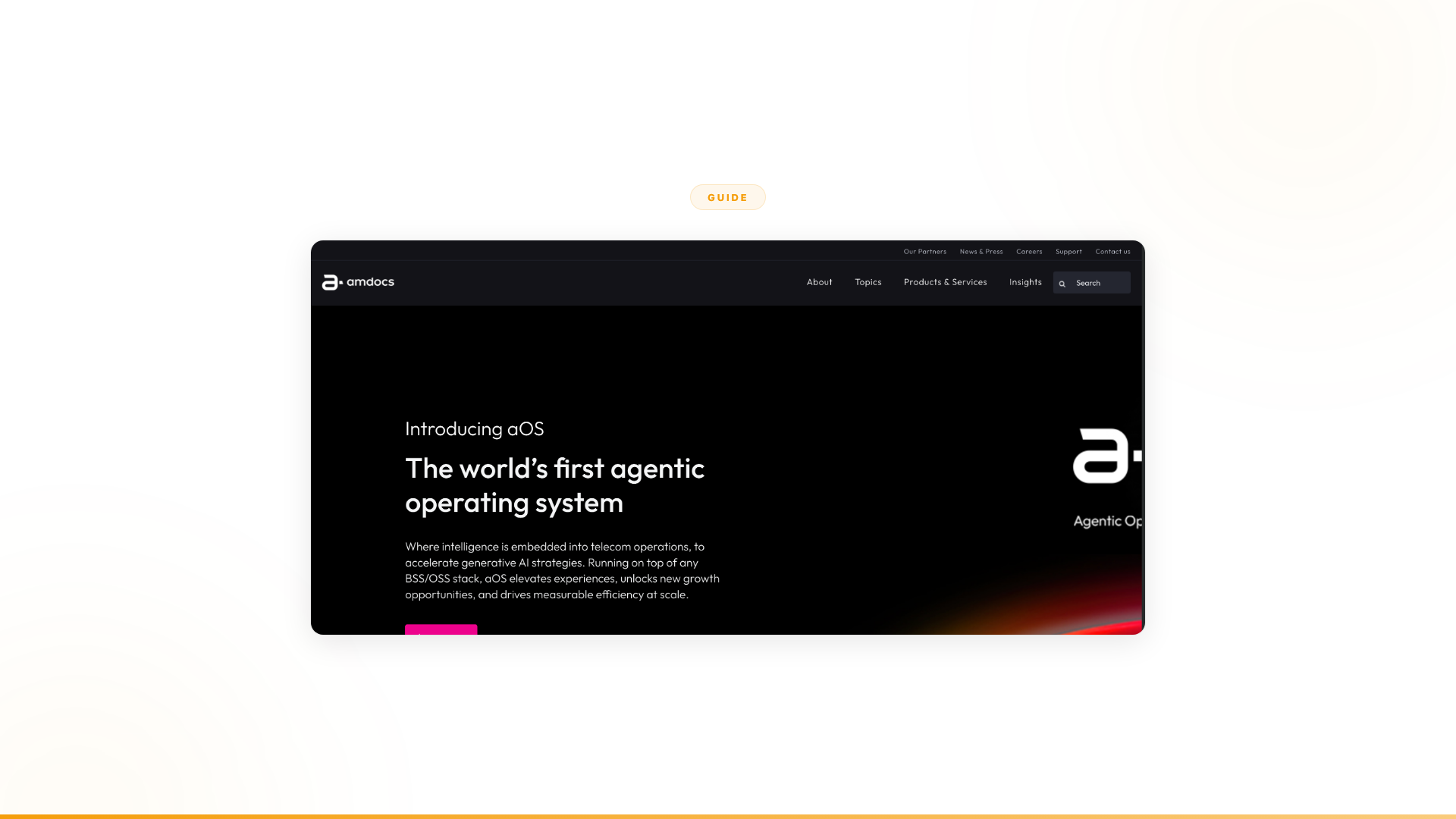
Amdocs delivers this through amAIz, its generative AI layer for telecom BSS. Nokia and Ericsson offer comparable AI-augmented BSS and OSS capabilities. Microsoft's partnership with telcos on Azure AI has extended the reach of these platforms into cloud-native deployments.
What this looks like in practice:
- Billing intelligence: AI detects anomalies, predicts disputes, recommends plan changes based on usage patterns.
- Subscriber analytics: Churn prediction, lifetime value modeling, next-best-action recommendations for customer service agents.
- Agent assist: During a customer call, the AI surfaces relevant subscriber data, suggests responses, and recommends actions. The human agent makes the decision and executes.
- Product recommendations: Based on subscriber behavior, the AI recommends upsells and cross-sells within the product catalog. Amdocs's Dynamic Offer Agents can design new bundles, simulate eligibility, and test pricing scenarios within hours rather than weeks.
What this requires:
- The BSS vendor's platform must be in place (or you're doing a platform migration simultaneously).
- The AI operates within the BSS data model. It doesn't access external systems.
- Professional services or SI engagement for implementation.
- 12–18 months before meaningful value. Longer if it's a new BSS deployment.
- Ongoing managed services for maintenance and optimization.
What this doesn't do:
- Complete multi-step workflows across systems (onboarding, compliance, sales intelligence).
- Handle processes that span departments outside BSS (HR, legal, finance, operations).
- Work autonomously. The AI recommends. Humans decide and execute.
- Connect to systems outside the BSS ecosystem without custom integration work.
Path 2: Deploy AI agents across the BSS and everything else (agent-led)
This approach doesn't replace or modify the BSS. It deploys autonomous agents that connect to the BSS (through APIs or existing integration layers) alongside every other system involved in telecom operations. The agents complete full workflows end-to-end, using the BSS as one of many data sources and action points.
TM Forum has identified this pattern — agentic AI operating across BSS and adjacent systems — as a strategic imperative for the next wave of telecom innovation.
What this looks like in practice:
- Customer onboarding: An agent collects customer information through any channel (web, WhatsApp, in-store, call center), validates it against the compliance database, checks eligibility, selects the right plan from the BSS catalog, initiates provisioning, updates the CRM, sends confirmation via the customer's preferred channel, and escalates exceptions with full context. One agent. Multiple systems. Complete workflow.
- Compliance monitoring: An agent monitors regulatory changes, cross-references them against current system configurations and customer communications, identifies gaps, generates remediation plans, routes them for approval, and tracks completion. The BSS is one data source among many.
- Sales intelligence: An agent monitors market signals, competitive activity, customer expansion triggers, and partnership opportunities across thousands of accounts. It synthesizes data from CRM, news feeds, financial reports, and internal communications. The BSS provides subscriber data. The agent does everything else.
- Support automation: An agent handles the full customer interaction: understanding the issue, pulling data from the BSS and other systems, making a decision, executing the resolution, and confirming with the customer. Not agent assist. Agent execution.
What this requires:
- API access to your existing BSS (most modern BSS platforms expose APIs; legacy systems may need an integration layer).
- No BSS migration or platform change.
- Business teams define the workflows. Forward Deployed Engineers handle integration complexity.
- Days to weeks for production agents. 3-month POC tied to measurable outcomes.
What this doesn't do:
- Replace your BSS for billing, provisioning, or order management. The BSS keeps doing what it does well.
- Require you to commit to a single vendor's ecosystem. Agents work with any BSS, any CRM, any system.
BSS vendor AI capabilities: a quick comparison
| Vendor | AI product | Primary scope | Cross-system workflows |
|---|---|---|---|
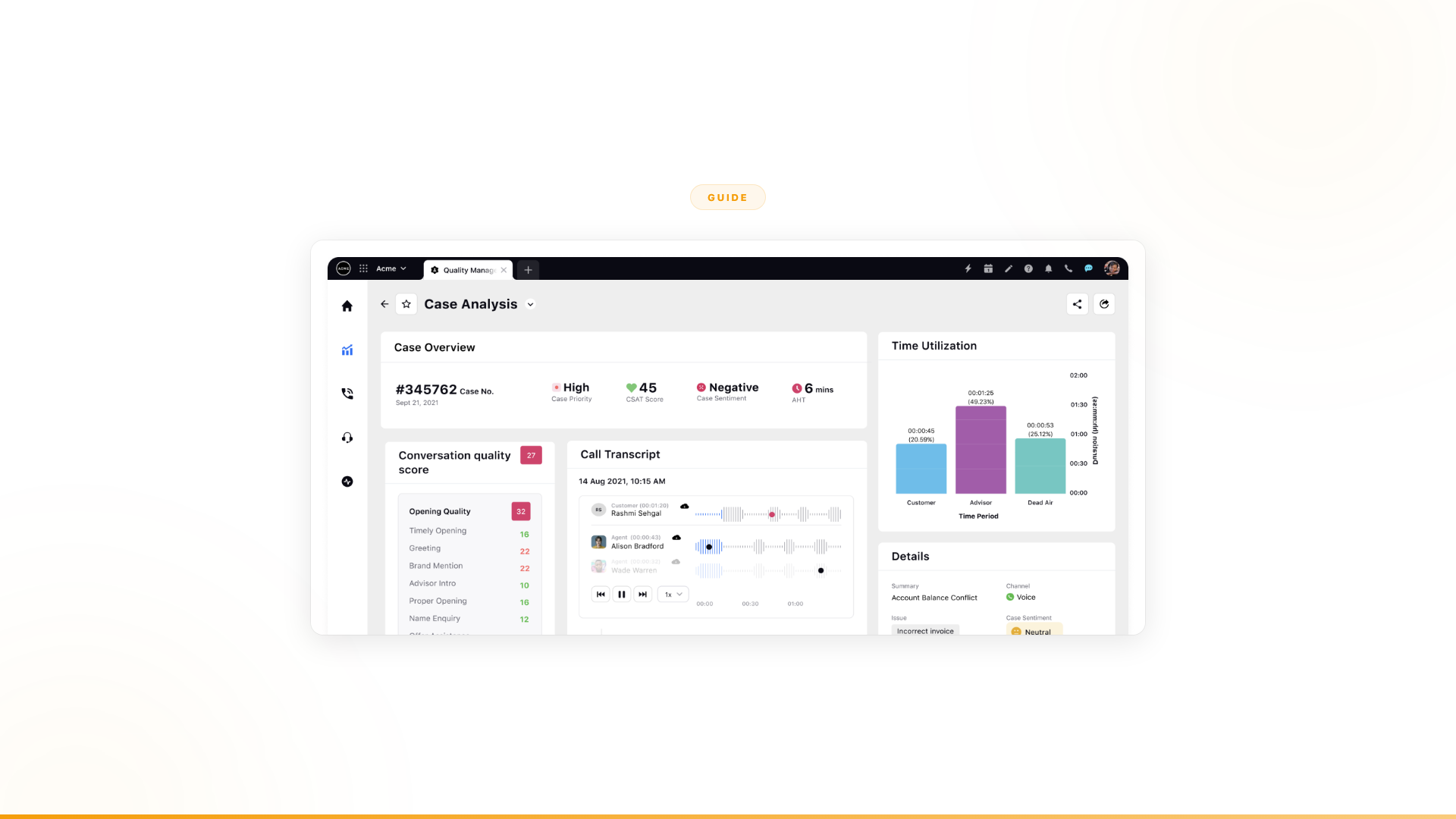
| Amdocs | amAIz | Billing, subscriber analytics, agent assist, dynamic offers | No — BSS data model only |
| Netcracker (NEC) | AI/ML layer | Order management, network orchestration, analytics | No — within platform |
| CSG Systems | Revenue management AI | Billing accuracy, fraud, churn prediction | No — within platform |
| Ericsson | AI-augmented OSS/BSS | Network automation, service assurance | Limited — network-side |
| Nokia | AVA cognitive platform | Network AI, analytics | Limited — OSS-focus |
| Autonomous agents (e.g., Nexus) | Agent platform | Any workflow across any systems | Yes — 4,000+ integrations |
For a detailed breakdown, see: Nexus vs Amdocs · Nexus vs Ericsson · Nexus vs Nokia
When each path makes sense
Choose Path 1 (BSS AI layer) when:
Your BSS itself needs modernization. If you're running a 15-year-old billing system that can't support modern product catalogs, real-time charging, or digital channels, the BSS needs to change regardless of AI. Adding an AI layer during a planned migration makes sense. The 12–18 month timeline is already part of the project.
Your challenges are inside the BSS. If the primary issues are billing accuracy, subscriber analytics, product recommendation quality, or agent assist during billing-related calls, BSS AI addresses those directly. The intelligence layer works because the data and the actions all live within the same system.
You're already deep in the vendor ecosystem. If Amdocs runs your billing, provisioning, order management, and CRM, and you're not looking to diversify, adding amAIz is a natural extension. Same vendor, same data model, same support structure. The integration cost is lower because everything is already connected.
The scope stays within BSS boundaries. If you don't need AI for HR, compliance, sales intelligence, cross-departmental reporting, or any workflow that crosses system boundaries, a BSS-scoped AI layer avoids overbuilding.
Choose Path 2 (autonomous agents) when:
Your BSS works fine. The workflows around it don't. This is the most common scenario. The billing system does its job. But customer onboarding is a manual, multi-system process. Compliance monitoring is spreadsheets and email. Sales intelligence is scattered across tools. The BSS isn't the bottleneck. The operational workflows are. According to IDC, 56% of IT costs at telecom operators are attributable to legacy systems and technical debt — yet the biggest workflow inefficiencies sit in the processes around those systems, not inside them.
You need results in weeks, not years. BSS transformations take 12–24 months. Autonomous agents deploy in days to weeks. Orange went from concept to production in 4 hours for their first agent, with multi-market rollout in 4 weeks (Nexus client data). If the business case requires value this quarter, not next year, agents deliver faster.
Your workflows cross system boundaries. The moment a process touches the BSS and the CRM and the compliance database and the communication platform, BSS AI can't follow it. Agents work across 4,000+ integrations. One agent, multiple systems, complete workflow.
Business teams need to own the AI. BSS AI is built and maintained by IT teams and systems integrators. Autonomous agents are built and owned by business teams. At Orange, the business team built the agents. When the people who understand the work build the solution, adoption accelerates.
You can't wait for a BSS migration to start doing AI. Many operators are in a holding pattern. The BSS migration is planned but hasn't started, or it's underway but 12 months from completion. Agents don't require a BSS migration. They connect to whatever exists today.
A practical framework: 5 steps to modernize BSS operations with AI agents
Step 1: Map the workflows, not the systems
Most BSS modernization projects start by mapping systems: what runs billing, what handles provisioning, what manages the catalog. AI agent deployment starts differently. Map the workflows.
Pick the three highest-impact operational workflows in your organization. For each one, trace every step: which systems are touched, which teams are involved, where decisions are made, where exceptions occur, and where the process breaks down. You'll likely find that each workflow crosses 4–8 systems and involves multiple departments.
This map reveals something important: BSS AI can help with the steps that live inside the BSS. The other 60–80% of the workflow is untouched.
Step 2: Identify workflows with the highest volume and complexity
Not all workflows benefit equally from autonomous agents. The highest ROI comes from workflows that are:
- High volume: Thousands of executions per month (customer onboarding, support requests, compliance checks).
- Multi-system: Cross 3+ systems per execution.
- Exception-heavy: Require judgment, validation, or routing decisions that rule-based automation can't handle.
- Time-sensitive: Delays directly impact revenue, customer satisfaction, or compliance.
Customer onboarding, support automation, and compliance monitoring hit all four criteria for most telecom operators.
Step 3: Start with one workflow, prove value in 3 months
Don't try to transform everything at once. Pick the single workflow with the clearest ROI and the most measurable outcomes. Deploy agents for that workflow. Measure the results against a baseline.
This is how Nexus engagements work: a 3-month proof of concept tied to specific, measurable outcomes. Forward Deployed Engineers embed with your team from day one. They help identify the right workflow, design the agents, handle integration complexity, and run the pilot without draining internal resources.
Orange started with customer onboarding. One workflow. Measurable outcomes: conversion rate, autonomous resolution rate, revenue impact, CSAT improvement. The results — 50% conversion improvement, ~$6M+ yearly revenue impact, 90% autonomous resolution — made the business case for expansion self-evident (Nexus client data).
Step 4: Expand across departments
Once the first workflow is proven, the expansion pattern is straightforward. The platform is already connected to your systems. The integration work is done. Adding new workflows means defining new agents, not new infrastructure.
A leading European telecom went from initial deployment to a dozen production agents in 12 weeks. Support, compliance, registration, data harmonization, escalation routing. Each new agent used the existing integrations and platform capabilities. The marginal cost and timeline for each additional workflow drops significantly (Nexus client data).
Step 5: Measure operational impact, not just BSS metrics
BSS AI measures subscriber metrics: CSAT, churn, revenue per user, billing accuracy. These matter. But operational AI should be measured by operational outcomes.
- Time saved: How many hours of manual work are agents completing per year?
- Revenue generated: What's the direct revenue impact of improved conversion, faster onboarding, or better sales intelligence? (Orange: ~$6M+ yearly revenue impact — Nexus client data.)
- Capacity freed: What percentage of support, compliance, or operational capacity is now available for higher-value work? (Leading European telecom: 40% of support capacity freed — Nexus client data.)
- Compliance maintained: Are regulatory requirements being met across all interactions with full audit trails?
- Adoption: Are teams actually using the AI? (Orange: 100% team adoption — Nexus client data.)
These metrics tell you whether AI is transforming operations, not just making one system smarter.
Common mistakes in BSS AI modernization
Mistake 1: Waiting for BSS migration to start AI deployment
The most expensive mistake. Operators plan a 12–24 month BSS migration, then plan to add AI after the migration is complete. Meanwhile, manual operational workflows continue burning resources, losing customers, and creating compliance risk. Autonomous agents connect to your existing BSS. You don't need to wait.
PwC's 2026 telecom transformation research recommends running AI deployment and BSS modernization on parallel tracks rather than sequentially — noting that well-scoped AI agents can begin delivering value immediately while identifying the specific BSS bottlenecks worth fixing next.
Mistake 2: Extending BSS AI into workflows it wasn't designed for
Your BSS vendor says "we have AI agents too." They do. Agent assist for billing queries, subscriber analytics, product recommendations. That's real. But when you try to use those capabilities for customer onboarding, compliance monitoring, or cross-departmental operations, the scope gap becomes apparent. BSS AI understands BSS data. It doesn't complete cross-system workflows.
Microsoft's research on GenAI in OSS/BSS notes that while BSS AI excels at within-platform intelligence, "multi-domain workflow completion" requires an orchestration layer that sits above the BSS — not inside it.
Mistake 3: Building custom instead of deploying proven platforms
The engineering temptation is real: "We'll build it ourselves with LangChain/LangGraph." Then 6–12 months pass, the first agent is barely in testing, governance and security aren't solved, and the engineers you diverted from product work are getting pulled back. The opportunity cost math doesn't work for almost anyone. Proven agent platforms with pre-built telecom integrations eliminate the build risk.
Mistake 4: Treating AI deployment as an IT project
BSS AI is an IT project by nature. It lives in the BSS platform, configured by IT teams, maintained by vendors or SIs. Operational AI shouldn't follow the same model. The people who understand the workflows — sales managers, compliance officers, operations leads, customer service directors — should build and own the agents. When AI deployment requires a 6-month IT project for every workflow, adoption stalls. When business teams can build production agents in days, adoption accelerates.
Mistake 5: Measuring AI by the wrong metrics
BSS AI is measured by subscriber metrics. Operational AI should be measured by operational outcomes. If you measure autonomous agents by CSAT alone, you'll miss the revenue impact, capacity gains, compliance improvements, and adoption rates that tell the full story.
What BSS modernization looks like in 2026
The operators getting the most from AI aren't choosing between BSS intelligence and autonomous agents. They're running both. The BSS keeps doing what it does well: billing, provisioning, catalog, order management. The AI layer on top of the BSS adds subscriber intelligence. And autonomous agents handle the operational workflows that span across and beyond the BSS.
The key insight is that you don't need to wait for one to finish before starting the other. Your BSS migration can take 18 months while agents are completing onboarding workflows next week. The two approaches are parallel, not sequential. PwC describes this as the "dual-track" transformation model — the approach that leading operators are applying in 2026.
Orange didn't modernize their BSS to get ~$6M+ yearly revenue from AI. They deployed agents that connected to their existing systems. First agent in 4 hours. Multi-market rollout in 4 weeks.
A leading European telecom didn't wait for a platform migration. They built a dozen agents in 12 weeks. 40% of support capacity freed.
The BSS handles the telecom systems. Agents handle the telecom operations.
Frequently asked questions
What is telecom BSS? Business Support Systems (BSS) are the software platforms that manage subscriber data, billing, product catalog, and customer management for telecom operators. Major BSS vendors include Amdocs, Netcracker, CSG, and Tecnotree. BSS is typically distinguished from OSS (Operations Support Systems), which handles network provisioning, fault management, and service assurance.
What is the difference between BSS AI and AI agents for telecom? BSS AI (from vendors like Amdocs amAIz or Ericsson's AI-augmented BSS) adds intelligence within the BSS data model: billing anomaly detection, subscriber churn prediction, next-best-action for service agents. AI agents operate across BSS and all other operational systems — completing the multi-step workflows (onboarding, compliance monitoring, sales intelligence) that cross departments and systems outside the BSS.
How long does BSS modernization with AI take? Vendor-led BSS AI implementation typically takes 12–18 months and requires an active BSS migration or an existing modern BSS platform. AI agent deployment around an existing BSS typically takes 2–6 weeks for a first production workflow and 3–6 months for a multi-workflow suite (Nexus client average).
Can AI agents work with legacy BSS systems? Yes, provided the legacy BSS has APIs or integration points — which most systems built in the last decade do. AI agents connect to existing systems regardless of age, bypassing the need for a full BSS migration. Operators can get AI-driven operational improvements without waiting for a platform replacement.
What telecom workflows are best suited for AI agents vs. BSS AI? BSS AI handles within-platform intelligence: billing optimization, subscriber analytics, and agent assist during billing-related calls. AI agents handle multi-system operational workflows: end-to-end customer onboarding across channels, cross-system compliance monitoring, sales intelligence aggregation from CRM and market data, and support automation that spans BSS, CRM, and communication platforms.
Worth exploring?
If you're planning a BSS modernization and wondering where AI agents fit, or if you've been waiting for the BSS migration to finish before deploying AI, the answer is simpler than the vendor landscape suggests. Start with the operational workflow that's costing you the most. Deploy agents that connect to your existing systems. Measure the results in 3 months.
Every Nexus engagement starts with a proof of concept tied to measurable outcomes. Forward Deployed Engineers embed with your team from day one. 4,000+ integrations connect to whatever BSS, CRM, and enterprise systems you already have. No platform migration required.
100% of clients who started a POC converted to an annual contract. Every one.
See how Nexus works for telecom operators -->
Related reading
- Nexus vs Amdocs: BSS/OSS AI vs autonomous agents
- Nexus vs Ericsson: network AI vs operational workflows
- Nexus vs Nokia: network automation vs business operations
- Top 10 Amdocs alternatives for telecom AI
- Amdocs vs Ericsson AI: telecom AI compared
- Top 10 AI tools for telecom operations
- How Nexus works for telecom operators