How to Automate Customer Success with AI Agents (2026 Guide)
CS platforms track health scores. AI agents act on them. Here's a practical guide to moving from reactive customer success to proactive, AI-driven retention and expansion across the full customer lifecycle.
To automate customer success with AI agents, deploy agents that complete the work CS platforms identify but cannot execute: investigating at-risk accounts, initiating remediation across systems, managing renewals end-to-end, and driving expansion. The five-step approach: start with the highest-volume CS workflow, map all exception paths, integrate across every system the workflow touches, deploy with embedded engineering support, then measure and expand.
Most customer success teams face the same constraint. They have more data than ever — health scores, usage analytics, NPS trends, support ticket patterns, renewal forecasts — and less capacity to act on it. Research from Gainsight shows CSMs in high-touch models manage an average of 22 enterprise accounts; in low-touch models, that number reaches 144. According to Vitally's CS benchmarks, 66% of CSMs still spend a significant portion of their working day on repetitive administrative tasks, and 72% say there are parts of their job they would automate if they could.
The data tells them which accounts are at risk. They can meaningfully engage with a fraction of them before the quarter ends.
This guide is about closing that gap — not by adding another dashboard that tells you what's happening, but by deploying AI agents that complete the work: investigating why accounts are at risk, executing remediation across systems, proactively reaching out before problems escalate, and managing the operational complexity that no human team can handle at scale.
The shift is not from manual CS to "AI-assisted" CS (which mostly means the same work with a chatbot helping). It is from reactive CS, where humans respond to signals they cannot keep up with, to proactive AI-driven retention, where agents complete the full workflow across systems and departments before the customer considers leaving.
Why traditional customer success automation fails
Let's be specific about where the industry is.
Health scores work. Acting on them does not scale. Gainsight, Totango, ChurnZero, and every other CS platform can tell you which accounts are at risk, what the leading indicators are, and when renewal is approaching. The detection problem is largely solved. The action problem is not. When your team identifies 30 at-risk accounts and can meaningfully engage with 8, the platform is doing its job. Your team's capacity is not.
Playbooks trigger. Humans still execute. CS playbooks — SuccessPlays, automated workflows, lifecycle campaigns — are sophisticated. They fire at the right time, assign the right tasks, and send the right notifications. But they assign those tasks to humans who already have full plates. The playbook says "schedule a QBR with the champion." The CSM still has to investigate the account, prepare the deck, find the data across five systems, coordinate with support on open issues, and actually run the meeting. The automation triggers the work. It does not do the work.
Communication sequences are not remediation. Most CS "automation" is email automation: onboarding drip campaigns, renewal reminder sequences, check-in templates. These are useful for coverage, but they are not customer success — they are marketing to existing customers. When an account is genuinely at risk because of a technical issue, a billing dispute, a missing integration, or a change in business needs, an email sequence does not resolve it. A human or agent investigating the root cause across multiple systems resolves it.
Single-function tools create gaps. Your sales AI handles prospecting and pipeline. Your CS platform tracks health. Your support tool handles tickets. Your billing system manages payments. The customer lifecycle runs across all of them. When a support issue affects health scores, which affects renewal, which requires billing flexibility, which needs legal review, no single tool orchestrates that end-to-end. A CSM becomes the integration layer, manually connecting dots across disconnected systems.
Moving from CS health scores to autonomous action
Here is the maturity model that clarifies the opportunity.
Level 1: Manual CS. CSMs manage accounts using spreadsheets, calendar reminders, and institutional knowledge. They check health manually, reach out based on intuition, and manage renewals through personal relationships. This worked when portfolios were small.
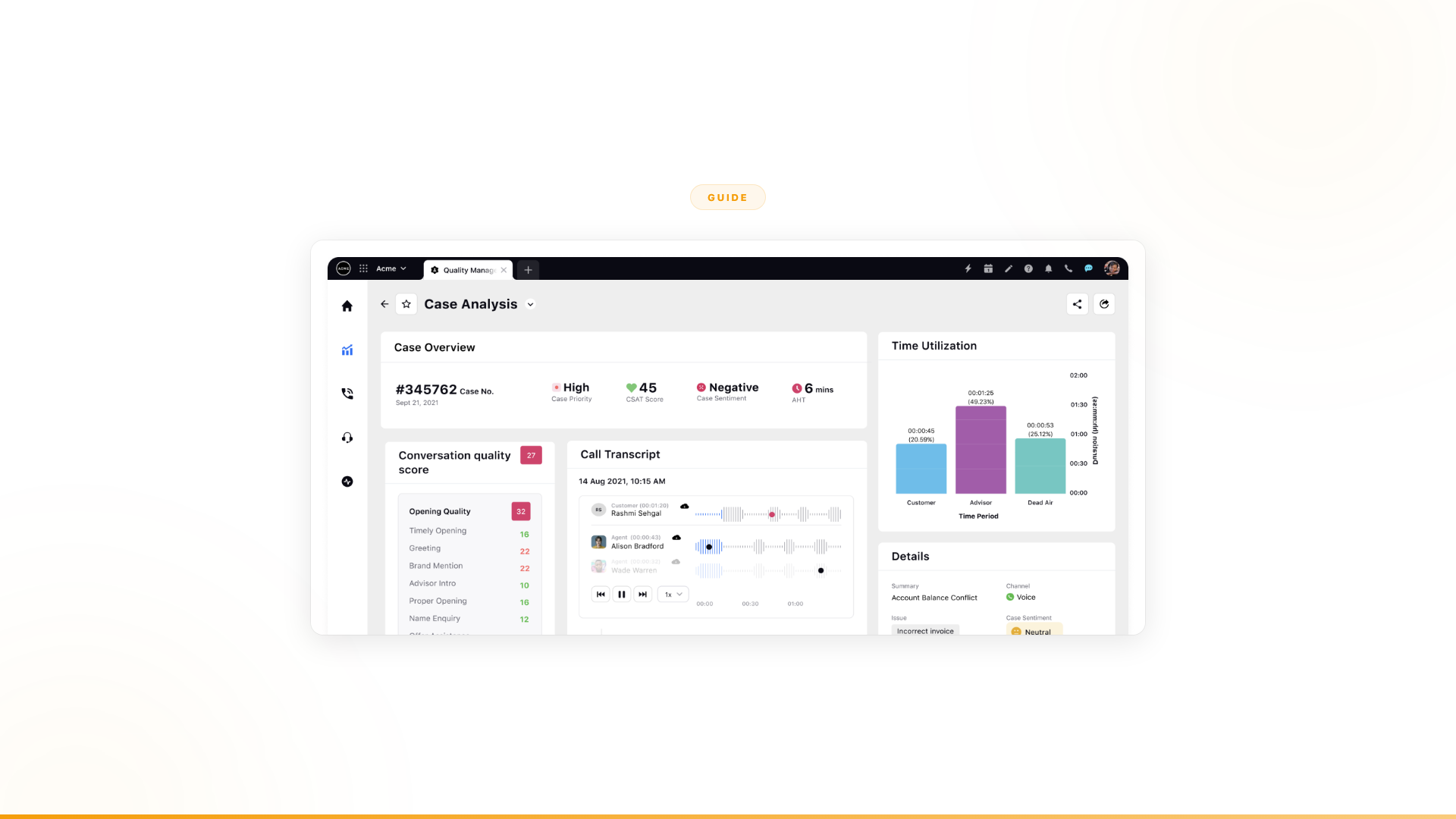
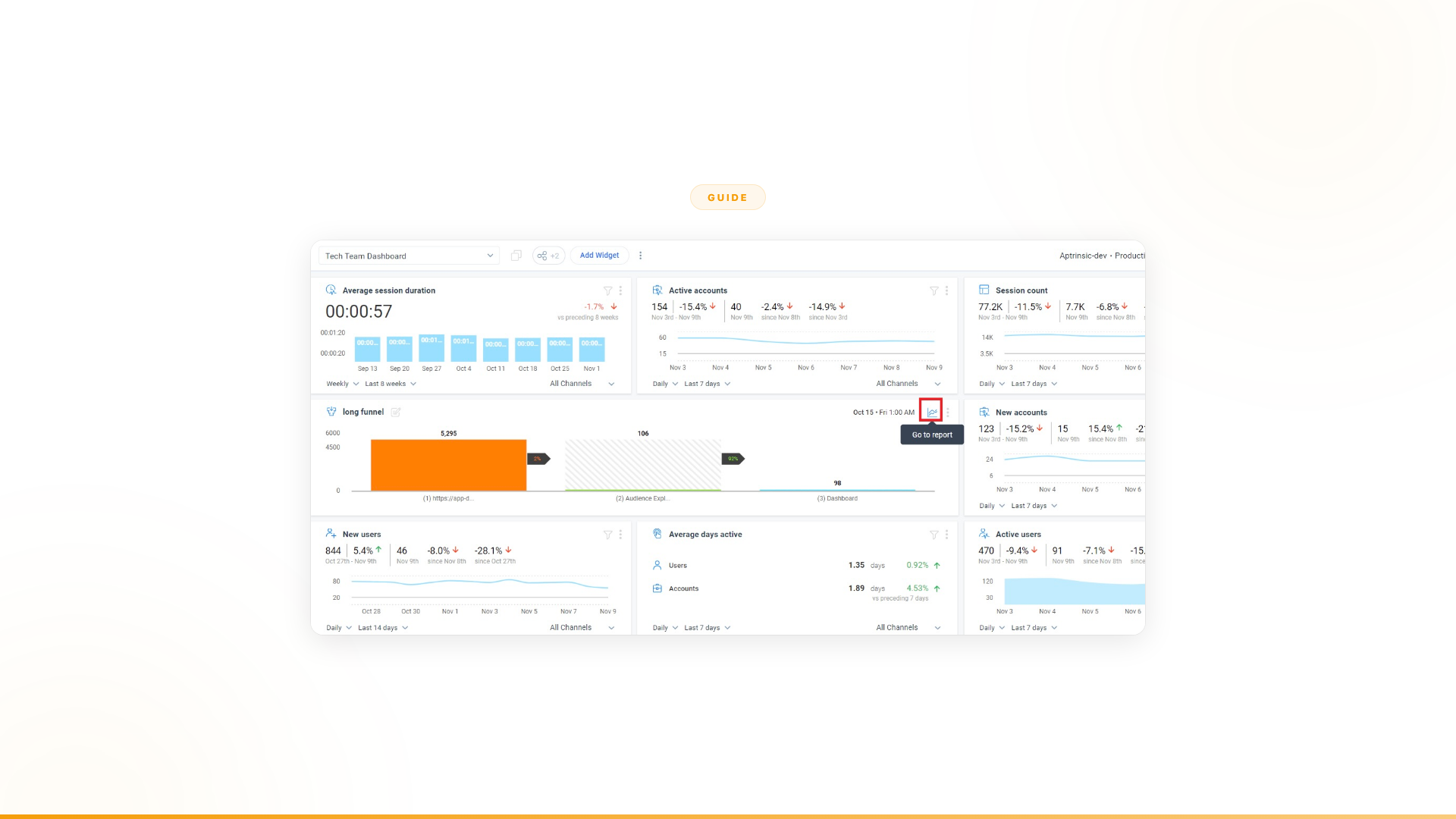
Level 2: Tracked CS. CS platforms (Gainsight, Totango, and others) centralize health data, automate playbook triggers, and provide dashboards. CSMs know what is happening. They are still doing all the work, but they are more informed about priorities. This is where most CS teams operate today.
Level 3: Assisted CS. AI features help CSMs work faster. AI drafts emails. AI summarizes account activity. AI suggests next best actions. The CSM is still the one investigating, deciding, and executing. AI makes them 20-30% more efficient, but the structural constraint — one human managing dozens of accounts — remains unchanged.
Level 4: Autonomous CS. AI agents complete entire customer success workflows. Not just flagging that an account is at risk, but investigating why (pulling data from CRM, support, billing, product usage), determining the root cause, initiating the remediation workflow, executing actions across systems, and following up to confirm resolution. The CSM handles exceptions, strategic relationships, and complex negotiations. The agent handles everything else.
Most of the industry sits between Level 2 and Level 3. The tools keep getting smarter at detection and suggestion. But the execution gap stays constant because no amount of better dashboards changes the math of one human managing a large portfolio of accounts.
The jump to Level 4 is not incremental. It requires a different architecture — not a CS platform with AI features bolted on, but an agent platform where autonomous workflows can span any system, any department, and any decision point in the customer lifecycle.
The market is moving this direction rapidly. According to MarketsandMarkets, the AI for customer service market is projected to grow from $12.06 billion in 2024 to $47.82 billion by 2030 — a 25.8% CAGR — driven by the shift from reactive support tools to autonomous agents that resolve issues end-to-end.
5 customer success workflows AI agents automate
These are the patterns enterprises are deploying in production today.
Workflow 1: Autonomous customer onboarding
The problem: Onboarding is where most customer relationships are won or lost. A customer signs. They need to be guided through setup, configuration, data migration, integration, and activation. Every day the onboarding stalls, the churn risk increases. Most CS teams handle this with a combination of email sequences and manual CSM check-ins. For high-volume accounts — dozens or hundreds onboarding simultaneously — coverage is impossible.
What the agent does: Guides the customer through the entire onboarding journey. Collects required information. Validates it against backend systems. Troubleshoots issues in real time. Answers questions using the knowledge base and account context. Escalates complex cases with full context (not "please explain your issue again"). Monitors progress against milestones and proactively reaches out when a customer stalls.
Production example: Orange Group deployed autonomous onboarding agents across multiple European markets. Their previous CX chatbot had a 27% drop-out rate — customers started onboarding, hit a wall, and left. With agents handling the full workflow (data collection, validation, troubleshooting, escalation), conversion improved by 50%. Deployed in 4 weeks. 100% team adoption. (Nexus client data.)
Workflow 2: Proactive health monitoring and remediation
The problem: Health scores are retroactive. By the time the score drops, the damage is often done. And even when the score drops in time, the investigation and remediation workflow — why did usage decline? is there an open support issue? has the champion changed roles? is billing current? — takes 2-4 hours per account. At scale, proactive remediation is a fantasy without automation.
What the agent does: Continuously monitors health signals across product usage, support history, billing status, engagement patterns, and stakeholder activity. When a pattern indicates risk, the agent does not just flag it. It investigates across systems, identifies the probable root cause, and initiates the appropriate remediation workflow. Technical issue? The agent coordinates with support. Billing dispute? Escalated with full context. Stakeholder departed? The agent identifies the new contact and adjusts the engagement plan.
How this changes the math: A CSM can proactively investigate and remediate perhaps 5-8 accounts per month. An agent can handle hundreds. The CSM focuses on strategic relationships and complex negotiations that require human judgment. Everything else is covered.
Workflow 3: Expansion and upsell identification
The problem: Expansion revenue is the highest-ROI activity in customer success and the most under-resourced. CSMs know which customers could benefit from additional products or upgrades. They rarely have time to pursue it because firefighting consumes their bandwidth. The expansion opportunity sits in a dashboard, visible and untouched.
What the agent does: Monitors usage patterns, contract terms, industry benchmarks, and competitive intelligence to identify expansion opportunities. But identification is the easy part. The agent also prepares the business case: relevant usage data, ROI projections based on the customer's actual metrics, competitive context, and timing considerations. It initiates the conversation, routing a prepared expansion proposal to the right stakeholder at the right time.
Why this matters for NRR: Net revenue retention is the metric that separates good CS organizations from great ones. According to High Alpha's 2025 SaaS benchmarks, median NRR across B2B SaaS companies is 106%, while top-performing companies exceed 120%. Enterprise segments reach 118% NRR. The companies driving 120%+ NRR are not doing it because their CSMs are working harder. They are doing it because expansion is systematized, not ad hoc. Agents make expansion systematic because they are not distracted by firefighting.
Workflow 4: Cross-system renewal management
The problem: Renewal is not a single action. It is a 90-day process involving health verification, risk assessment, stakeholder alignment, contract review, pricing negotiation, legal coordination, and execution. Most CS platforms trigger a "renewal approaching" alert 90 days out and assign tasks. The CSM then spends 3-6 hours per enterprise renewal coordinating across systems and departments.
What the agent does: Manages the renewal workflow end-to-end. 90 days out: pulls current health data, usage trends, support history, and stakeholder engagement. Identifies risks. Prepares the renewal brief. 60 days out: initiates stakeholder outreach with a personalized business review. 30 days out: coordinates contract generation, pricing confirmation, and legal review. At each stage, the agent executes the operational work and surfaces decisions that require human judgment.
Workflow 5: Support-to-success loop
The problem: Support and CS are treated as separate functions with separate tools. But from the customer's perspective, it is one relationship. A support ticket about a broken integration is also a CS issue that affects health, adoption, and renewal. When these functions operate in silos — support handles the ticket, CS does not know about it until the health score drops — the customer experiences a disconnected company.
What the agent does: Connects the support and success loops. When a support interaction reveals a systemic issue (not just a one-time bug), the agent updates the CS workflow: adjusting the health score, triggering the appropriate playbook, notifying the CSM with context, and initiating remediation if appropriate. Going the other direction, when a health score drops, the agent checks recent support history before initiating outreach, so the customer is not contacted about an issue already being resolved.
How to deploy AI agents for customer success: 5-step guide
The technology matters, but the deployment approach matters more.
Step 1: Start with the highest-volume, most repetitive CS workflow
Do not try to automate everything at once. Pick the single workflow where volume is highest, the process is most consistent, and the cost of manual execution is clearest. For most teams, this is either customer onboarding or support-to-success escalation handling.
The goal of the first agent is not to solve your entire CS problem. It is to prove that AI agents can complete real work in your environment, with your systems, your data, and your compliance requirements.
Step 2: Map the full workflow, not just the happy path
Most CS automation fails because it maps the ideal process and breaks on the first exception. Real customer success workflows are 60% exceptions. The customer does not have the data you need. The system is down. The request does not match any standard category. The stakeholder is unresponsive.
Before building, map the full workflow: the standard path, the top 10 exception paths, the escalation criteria, and the handoff points. The agent needs to handle all of them — not by stopping and creating a ticket, but by adapting intelligently or escalating with full context.
Step 3: Integrate across systems, not within one
The defining limitation of CS platforms is that they live in one system. The customer lifecycle lives in ten: CRM, billing, support, product analytics, communication tools, compliance systems, contract management. An agent that only works inside the CS platform has the same scope limitation as the CS platform itself.
Effective deployment means connecting the agent to every system the workflow touches. Nexus connects to 4,000+ enterprise systems. The first agent's integrations serve every subsequent agent — this is where the platform approach compounds.
Step 4: Deploy with people who have done it before
This is where most enterprise AI deployments fail. The technology works. The organizational change management does not. Teams resist. Processes do not adapt. Champions leave. Executives lose patience.
Forward Deployed Engineers solve this — not consultants who write a strategy document and leave, but engineers who embed with your team, identify the highest-impact use cases, design agents for your specific reality, handle integration complexity, and stay until the deployment delivers measurable outcomes.
Orange deployed in 4 weeks. Not because the technology is magic. Because the deployment approach is designed to eliminate the barriers that make enterprise AI stall.
Step 5: Measure, then expand
The first agent proves the model. The second agent expands it. The third compounds it.
A European consulting firm (400+ employees) built 5 agents across their full consulting lifecycle — interview agent, CV generator, project matchmaker, proposal copilot, HR agent — on a single platform. Proposal turnaround went from days to hours. Tens of thousands of hours freed monthly. (Nexus client data.)
Every subsequent agent deploys faster because the integrations, the governance framework, the institutional knowledge, and the operational patterns are already established.
CS platform vs. agent platform: which is right?
This is the decision that determines whether AI transforms your customer success or just adds another layer to the dashboard.
Option A: Add AI to your existing CS platform. Gainsight, Totango, ChurnZero, and others are adding AI features: email generation, health score prediction, next best action suggestions. These features make CSMs marginally more productive within the existing paradigm. The CSM still does the work. The platform helps them do it faster. If your CS operations are working and you need incremental improvement, this is the lowest-risk path.
Option B: Deploy a sales-specific AI system. Tools like Rox and 11x automate the sales function with AI agents. Genuinely powerful within their scope. But they do not touch customer success, support, compliance, or any post-sale workflow. CS teams looking for retention and expansion automation will not find it here. For a detailed comparison, see Rox vs Gainsight: AI Customer Success Compared.
Option C: Deploy an autonomous agent platform. Build agents that complete the full customer lifecycle: onboarding, health monitoring, remediation, expansion, renewal, support coordination — on one platform, connected to every system the workflow touches.
The difference between these options is not features. It is architecture. CS tools with AI features are dashboards that suggest. Sales AI tools are single-function executors. Agent platforms are foundations where any workflow becomes autonomous.
For a broader comparison of approaches, see Top 10 AI Customer Success Tools and Platforms and Top 10 Rox Alternatives for AI Customer Success.
What enterprises have deployed
Orange Group (multi-billion euro telecom, 120,000+ employees): Deployed autonomous customer onboarding agents across multiple European markets. Previous CX chatbot had a 27% drop-out rate. Agents now handle the full onboarding lifecycle. 50% conversion improvement. ~$6M+ yearly revenue impact. 90% autonomous resolution. 100% team adoption. 4-week deployment with Forward Deployed Engineers. (Nexus client data.)
European telecom (13,000+ employees): Spent 6 months with another AI platform without delivering a single production use case. Deployed a dozen Nexus agents in the same timeframe. 40% support volume freed across millions of interactions. Agents handle support, compliance, and customer operations. (Nexus client data.)
European consulting firm (400+ employees): 5 agents across the full consulting lifecycle. Interview agent, CV generator, project matchmaker, proposal copilot, HR agent. Proposal turnaround from days to hours. Tens of thousands of hours freed monthly. One platform, not five separate tools. (Nexus client data.)
Common objections to AI customer success (answered)
"We have already invested heavily in our CS platform. We cannot switch." You do not switch. Nexus connects to your existing CS platform and every other system. Gainsight's health scores inform agent behavior directly. The agent uses your existing data and workflows — it just completes the work your platform identifies but cannot execute.
"Our CSMs will resist being replaced." The agents do not replace CSMs. They handle the high-volume operational work that prevents CSMs from doing what they are actually good at: strategic relationship management, complex negotiations, and creative problem-solving. Research shows 66% of CSMs spend significant time on repetitive administrative tasks — exactly the work agents are built to handle. Agents reclaim that time for the CSM.
"AI cannot handle the nuance of customer relationships." It cannot handle all of it. That is the point. Agents handle the 80% of CS work that is operational — data gathering, system coordination, routine communication, process execution. Humans handle the 20% that requires judgment, empathy, and creative thinking. The result is not less nuanced customer success. It is more of it, because CSMs finally have time for the nuanced work.
"What if the agent makes a mistake with a key account?" Governance is built in. Every agent operates within defined guardrails. Decision thresholds determine when the agent acts autonomously and when it escalates. For high-value accounts, stricter escalation rules can be configured. Full audit trails trace every action: what data informed it, which rules applied, why it escalated or proceeded. SOC 2 Type II, ISO 27001, ISO 42001, GDPR compliant.
Frequently asked questions
What is the difference between a CS platform like Gainsight and an AI agent platform for customer success?
CS platforms (Gainsight, Totango, ChurnZero) detect risk and trigger playbooks, but assign the resulting tasks to humans. AI agent platforms complete the work: investigating why an account is at risk, executing remediation across systems, managing renewals end-to-end, and identifying expansion opportunities — without requiring a human handoff for routine tasks. The CS platform identifies the problem. The agent platform solves it.
Can AI agents replace customer success managers?
No. AI agents handle the 60-80% of CS work that is operational — data gathering, system coordination, routine communication, and process execution. CSMs focus on strategic relationships, complex negotiations, and creative problem-solving that require human judgment and empathy. The outcome is better customer success, not fewer CSMs: the same team covers more accounts with higher quality engagement.
Which customer success workflow should I automate first?
Start with the highest-volume, most repetitive CS workflow in your environment. For most teams, this is customer onboarding (high volume, clear conversion outcome) or support-to-success escalation handling (measurable ticket resolution rates). The goal of the first agent is to prove the model with measurable results before expanding to adjacent workflows.
How long does it take to deploy AI agents for customer success?
With an enterprise agent platform and embedded engineering support, most enterprises deploy a first production CS agent within 2-6 weeks. Orange deployed customer onboarding agents across multiple European markets in 4 weeks, with 100% team adoption. Deployment speed depends on integration complexity and the number of exception paths in the target workflow.
What happens to health score data from Gainsight when I add AI agents?
AI agents connect to your existing CS platform rather than replacing it. Gainsight's health scores inform agent behavior directly — the agent acts on the signals the platform already detects, executing the remediation work that previously required human intervention. Your existing data model, playbooks, and workflows remain intact.
Getting started
Every Nexus engagement starts with a 3-month proof of concept tied to specific, measurable outcomes. Forward Deployed Engineers embed with your team to identify the highest-impact customer success workflow, design the agent, integrate with your systems, and prove results before you commit.
You do not need to automate everything on day one. You need to prove that one agent, completing one critical workflow, delivers measurable value in your environment. Then you expand.
100% of clients who started a POC converted to an annual contract.
See how Orange deployed customer lifecycle agents -->
Related reading
- Nexus vs Rox: full comparison
- Top 10 Rox Alternatives for AI Customer Success
- Top 10 AI Customer Success Tools and Platforms
- Rox vs Gainsight: AI Customer Success Compared
- Nexus vs 11x: AI SDR vs Full Agent Platform
- Nexus vs Artisan: AI Employee vs Enterprise Platform
- Top 10 AI Agent Platforms for Enterprise